Kalahari
Safari Guide to Kalahari in Botswana
The Kalahari Botswana experience is very different from the classic image of a water-based safari in the Okavango Delta or a river safari along the Chobe. This is a quieter, wider and more remote side of Botswana, where the landscape feels open, dry and beautifully simple. Instead of thick riverine forests and permanent waterways, you find golden grasslands, fossil river valleys, salt pans, acacia scrub, desert-adapted wildlife and some of the most peaceful safari spaces in Southern Africa.
For travellers from Europe and other long-haul destinations, the Kalahari is often not the first place they think of when planning a Botswana safari. Many people begin with the Okavango Delta, Moremi Game Reserve and Chobe National Park. Those are excellent safari areas, but the Kalahari adds something completely different. It gives depth to a safari itinerary and reveals the dry, ancient and spacious heart of Botswana.
A Kalahari Botswana safari can be ideal for travellers who enjoy wilderness, big skies, photography, solitude, desert wildlife and a slower style of travel. It can work as a self-drive adventure, a guided mobile safari, a lodge-based safari or as part of a wider Botswana route that includes Maun, the Okavango Delta, Kgalagadi Transfrontier Park or even Namibia and Zimbabwe.
This guide explains what to expect, when to go, how many days you need, where the main safari areas are and how to plan a Kalahari journey properly.
What Makes Kalahari Botswana Special?
The Kalahari is often called a desert, but in Botswana it is not simply endless sand dunes. Much of it is semi-arid savanna, with grasslands, scrub, pans, dry riverbeds and open plains. This is part of what makes it so interesting. It can look empty at first, but once you slow down, the landscape begins to reveal itself.
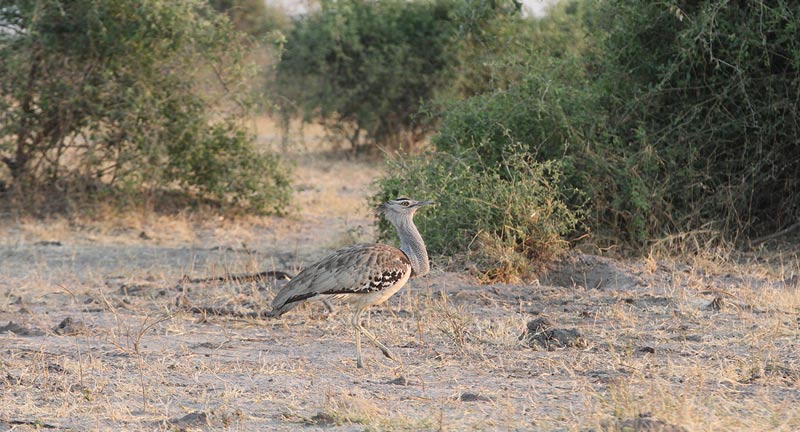
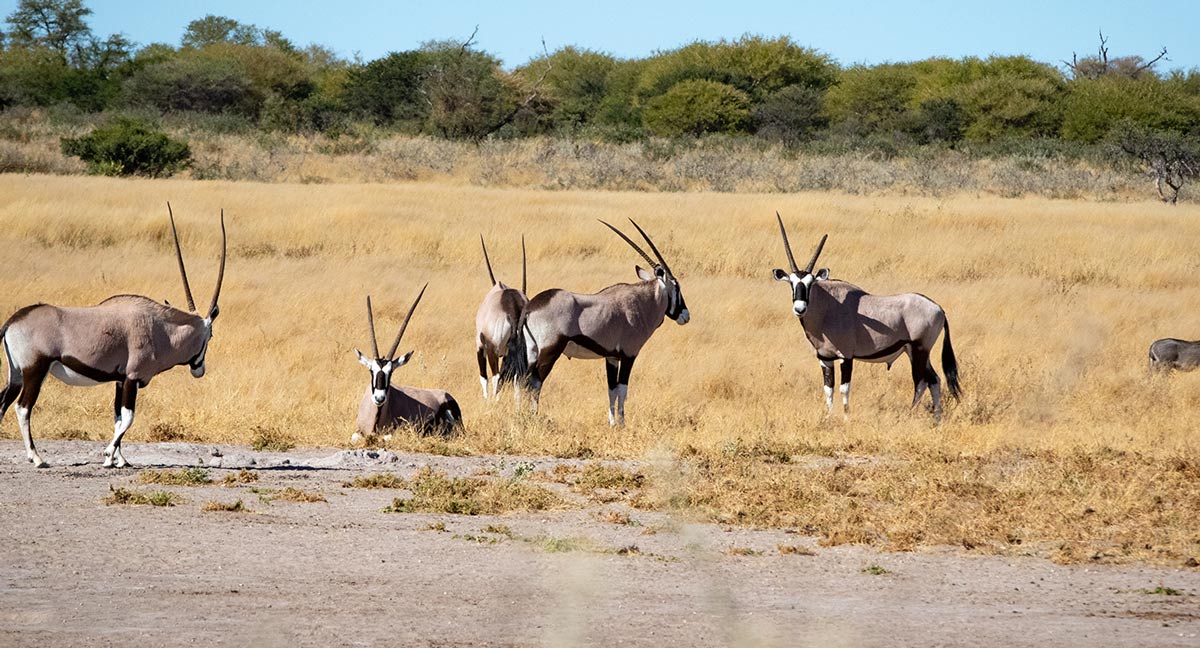
You may see gemsbok standing still in the heat, springbok moving across open plains, black-backed jackals trotting along sandy tracks, kori bustards walking through the grass or a lion resting under the limited shade of a thorn tree. In good seasons, after summer rains, parts of the Kalahari can become surprisingly full of life.
The Kalahari also has a strong cultural and historical importance. The San and other local communities have long histories in this environment, and many travellers find that this human story adds meaning to the landscape. Cultural experiences should always be handled respectfully, with proper local guides and without treating communities as a tourist display.
The biggest attraction of Kalahari Botswana is the feeling of space. The distances are large, the roads are remote and the silence is part of the experience. It is not a safari where every bend in the road brings another elephant herd. It is a safari that rewards patience, planning and curiosity.
Main Safari Areas in Kalahari Botswana
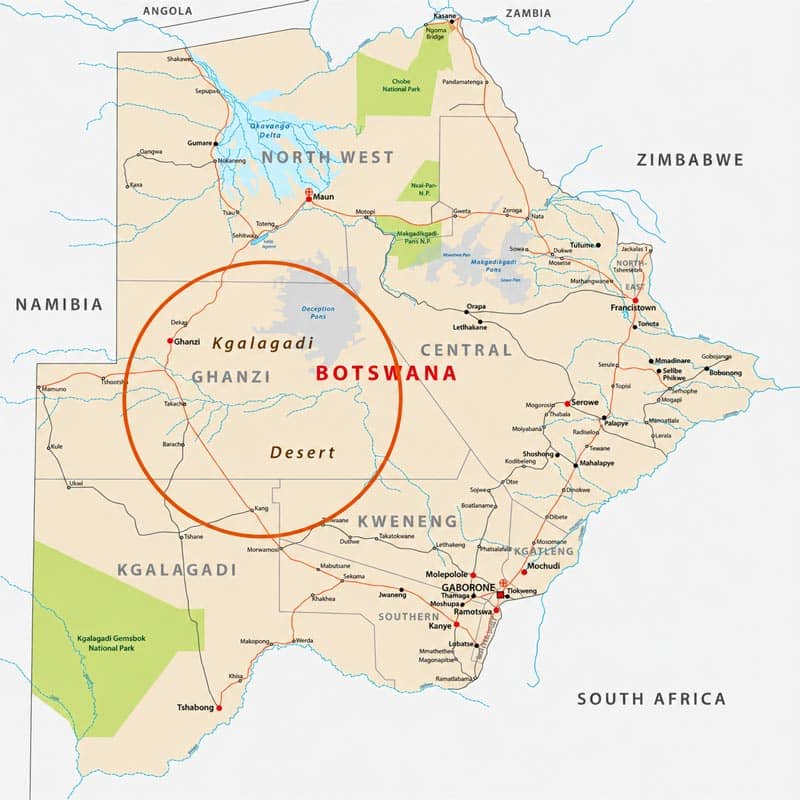
When people search for Kalahari Botswana, they may be referring to several different safari areas. The Kalahari covers a large part of Botswana, so it helps to understand the main regions.
Central Kalahari Game Reserve
The Central Kalahari Game Reserve, often called CKGR, is one of the most important wilderness areas in Botswana. It is huge, remote and not suitable for rushed travel. The reserve is known for open plains, fossil valleys, pans and desert-adapted wildlife.
Deception Valley is one of the best-known areas inside the reserve. After good rains, the grasslands can attract springbok, gemsbok, wildebeest and other herbivores, which in turn can attract predators. Other areas such as Sunday Pan, Leopard Pan, Passarge Valley and Piper’s Pan are also known among experienced Kalahari travellers.
The Central Kalahari is best for travellers who want a true wilderness feeling. It can be done by self-drive if you are well prepared, but many international travellers will feel more comfortable with a guided safari, especially if they are not used to deep sand, remote camping or long distances between services.
If you are planning a wider trip, explore our options for a fully catered Botswana safari or a self-drive safari in Botswana.
Kgalagadi Transfrontier Park
Kgalagadi Transfrontier Park lies in the far southwest of Botswana and is shared with South Africa. It is famous for red dunes, dry riverbeds, waterholes, raptors, gemsbok and the well-known black-maned Kalahari lions.
The Botswana side of Kgalagadi is wilder and more remote than the more developed South African side. Some routes require proper 4×4 preparation, and certain wilderness sections are not suitable for casual travellers. This is an area where planning matters. Travellers should be realistic about driving ability, vehicle equipment, fuel, water and campsite bookings.
Kgalagadi is excellent for people who love desert scenery, predators, birds of prey and photography. It combines well with South Africa or Namibia, but it can also be included in a longer Botswana route.
Tsodilo Hills
Tsodilo Hills, in northwest Botswana, offers a more cultural and historical Kalahari experience. It is known for ancient rock art and spiritual importance to local communities. It is not a classic big-game safari destination, but it can be a meaningful stop for travellers who want to understand more than wildlife alone.
Tsodilo can combine with the Okavango Panhandle, Namibia’s Zambezi Region or a broader cultural and nature-focused itinerary.
Best Time to Visit Kalahari Botswana
The best time to visit Kalahari Botswana depends on what kind of safari experience you want.
Dry Season: May to October
The dry season is generally easier for travel. Roads are usually more manageable, the weather is cooler in the middle of the year, and wildlife is often easier to spot around limited resources. From May to August, mornings and nights can be cold, especially in open desert areas.
Travellers from the northern hemisphere are sometimes surprised by how cold a Botswana safari can feel before sunrise.
September and October are hotter. These months can be excellent for wildlife in many parts of Botswana, but in the Kalahari the heat can be serious. Long drives, camping and vehicle problems become more demanding in high temperatures.
The dry season is a good option if you want more predictable road conditions and easier logistics. It is also a sensible time for self-drive travellers, provided they still prepare properly.
Green Season: November to April
The green season brings summer rains, fresh grass, dramatic skies, birdlife and new energy to the Kalahari. In the Central Kalahari, good rains can transform the plains and attract wildlife into areas such as Deception Valley. This is one of the most interesting times for travellers who want to see the desert come alive.
However, the green season can also bring muddy tracks, standing water in some areas, difficult driving and sometimes even closure of the park. Rainfall varies from year to year, so it is not possible to guarantee conditions. Some days may be hot and humid, while others may be beautifully fresh after rain.
For photographers, the green season can be wonderful. The light, clouds and contrast between grass and desert create a very different mood from the dry months.
Wildlife in Kalahari Botswana
Wildlife in the Kalahari is different from the wildlife experience in northern Botswana. You should not expect constant elephant herds, hippos or water-based animals in the deep desert areas. Instead, the Kalahari is known for species that are adapted to dry conditions and open habitats.
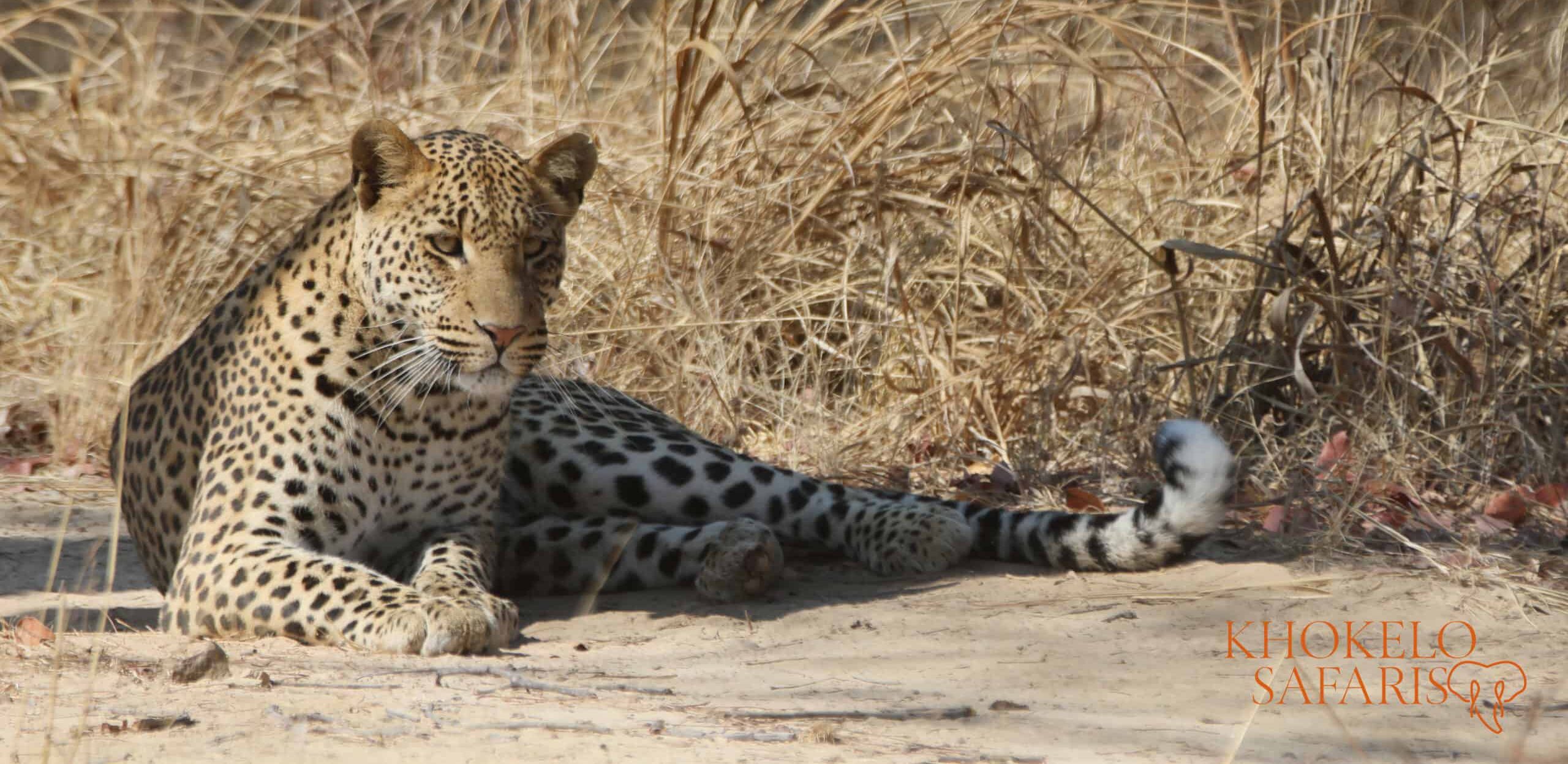
Common and notable animals can include gemsbok, springbok, wildebeest, red hartebeest, eland, giraffe in some areas, jackal, bat-eared fox, brown hyena, spotted hyena, cheetah, leopard and lion. In some areas, especially Kgalagadi, raptors are a major highlight. You may see martial eagles, bateleurs, secretary birds, goshawks and vultures depending on the region and season.
The black-maned Kalahari lion is one of the most famous animals associated with the region. Sightings are never guaranteed, but the possibility of seeing lions in such open desert scenery is one of the reasons many travellers choose the Kalahari.
Cheetah sightings can also be special because open plains suit their hunting style. Brown hyena, although not always easy to see, is another species that attracts experienced safari travellers.
Birding is excellent, especially for raptors, ground birds and seasonal species after rain. Even travellers who are not serious birders often enjoy the Kalahari because birds are easier to observe in open spaces.
How Many Days Do You Need for Kalahari Botswana?
You should avoid rushing the Kalahari. Distances are long, sightings can require patience, and the atmosphere is part of the reason to go.
For a short introduction, two to three nights in the wider northern Botswana region can work well as part of a safari itinerary. This gives you a taste of open landscapes without making the itinerary too difficult.
For the Central Kalahari Game Reserve, three to five nights is more realistic. This allows time for slow game drives, changing conditions and proper travel between areas. If you only stay one night, you may spend too much time driving and not enough time experiencing the reserve.
For Kgalagadi Transfrontier Park, four to seven nights can be worthwhile, especially if you want to explore both the South African and Botswana sides or include wilderness camps. Serious self-drive travellers may spend longer.
For a deeper Kalahari-focused safari, seven to ten days can allow you to explore several areas, depending on the route. However, this needs careful planning and should not be overloaded.
Self-Drive Safari vs Guided Safari in Kalahari Botswana
A Kalahari Botswana safari can be done as a self-drive trip or a guided safari. Both can be excellent, but they suit different travellers.
Self-Drive Safari
Self-drive gives freedom and adventure. You can travel at your own pace, stop for photography, choose your campsites and enjoy the satisfaction of navigating remote areas yourself. For travellers who love 4×4 travel, the Kalahari can be one of the most rewarding regions in Botswana.
But self-drive in the Kalahari should not be taken lightly. Roads can be sandy, remote and slow. Phone signal may be limited or absent. Fuel stops are far apart. Campsites may be unfenced. You need to understand tyre pressure, recovery gear, navigation, water planning and basic vehicle safety.
For travellers used to compact distances and reliable roads, Botswana can feel much bigger than expected. A route that looks simple on a map may take much longer in real conditions.
Self-drive is best if you are confident, prepared and realistic. Explore our Botswana self-drive safari options when planning your route.
Guided Safari
A guided safari can be the better choice for Kalahari travellers. A good guide understands animal movement, tracks, weather, road conditions and safety. This makes the experience more relaxed and often more rewarding.
Guided mobile safaris can be especially suitable in the Central Kalahari Game Reserve. You still get the wilderness feeling, but without carrying all the responsibility yourself. Lodge-based guided safaris can also work well, especially for travellers who want comfort after long days in remote areas.
A guided safari is not only about convenience. It can also add depth. A guide can explain tracks in the sand, animal behaviour, plants, seasonal changes and the smaller details that are easy to miss on your own.
If you prefer a safari where the practical details are taken care of, explore our fully catered Botswana safaris.

Where to Stay in Kalahari Botswana
Accommodation in the Kalahari depends on the area and the style of safari.
In the Central Kalahari Game Reserve, options include public campsites, private camps, mobile safari setups and selected lodges. Some campsites are very remote and basic, which can be part of the appeal but also requires proper preparation.
In Kgalagadi, accommodation differs between the Botswana and South African sides. The Botswana side is more remote and often better suited to experienced campers or carefully planned guided travel.
When choosing where to stay, do not look only at comfort. Look at access, driving distances, route flow, season, vehicle requirements and how many nights you have. A beautiful camp can become stressful if it is placed badly in the itinerary.
How Kalahari Botswana Connects with Other Safari Areas
The Kalahari combines well with several major safari routes.
A northern Botswana route can include Maun, the Okavango Delta, Moremi and Chobe National Park. This gives a strong contrast between water, woodland and dry savanna.
For travellers with more time, the Central Kalahari can be added before or after the Okavango Delta. This creates one of the best contrasts in Botswana: the dry interior and the watery delta.
Kgalagadi connects well with South Africa’s Northern Cape and Namibia. It can be part of a longer desert journey including Namibia’s Kalahari, Fish River Canyon or Sossusvlei, depending on the route.
For Zimbabwe and Zambia combinations, the Kalahari is usually included as part of a broader Botswana journey before continuing to Victoria Falls, Hwange National Park or the Zambezi region.
The key is not to connect too much too quickly. Southern Africa is large. A good safari route needs breathing space.
Practical Planning Tips for a Kalahari Botswana Safari
Planning matters more in the Kalahari than in easier safari destinations.
Book campsites, lodges and vehicle rentals early, ideally well ahead of your intended travel dates, especially for peak travel months. Some remote areas have limited availability, and last-minute planning can make the route awkward.
Choose the right vehicle. If you are self-driving into sandy or remote areas, a proper 4×4 is essential. It should have suitable tyres, recovery equipment, spare tyres, water storage, navigation tools and enough space for luggage and supplies.
Carry more water than you think you need. In remote areas, water is not only for drinking but also for emergencies. Heat, delays and vehicle issues can quickly change a simple travel day.
Keep luggage practical. Soft bags are easier than hard suitcases for safari vehicles. Neutral clothing, layers, a warm jacket for morning drives, sun protection, a hat, sunglasses and comfortable shoes are all useful.
Bring binoculars, even if you are not a serious birder. In open landscapes, binoculars help you enjoy distant wildlife, birds and small details.
Do not overpack camera gear unless you know how to use it. A good zoom lens is helpful, but dust protection and easy access matter just as much.
Download offline maps, but do not rely only on a phone. Remote Botswana travel requires backup navigation and sensible route planning.

Safety Advice for Kalahari Botswana
The Kalahari is not dangerous when respected, but it is remote. That means small mistakes can become serious if you are careless.
Always keep your distance from wildlife. Never approach lions, hyenas or any wild animal on foot. Campsites in wilderness areas may be unfenced, so food storage and night-time movement should be handled carefully.
Do not drive off-road unless it is clearly permitted. Off-road driving damages fragile environments and can create safety problems.
Tell someone your route if you are self-driving. In very remote areas, it is wise to have reliable communication plans and to understand emergency procedures.
Drive slowly on sandy tracks. Speed increases the chance of getting stuck, damaging the vehicle or missing wildlife.
Respect the heat. Avoid unnecessary activity in the hottest part of the day, drink water regularly and protect yourself from sun exposure.
Listen to guides and local staff. They understand the area better than any online guide or map.
Is Kalahari Botswana Good for First-Time Safari Travellers?
Yes, but with the right expectations.
If it is your first safari and you want easy wildlife sightings, the Okavango Delta, Moremi or Chobe may be better starting points. These areas often provide a more classic safari experience.
But if you are curious, patient and interested in landscapes as much as animals, the Kalahari can be a beautiful first safari destination. It is especially good when combined with other areas, so you experience both the dry and wet sides of Botswana.
For first-time travellers, a guided Kalahari safari or a lodge-based stay is often better than a difficult self-drive route. You can always include a self-drive section in easier areas and leave the deeper Kalahari to experienced guides.

Planning Your Safari with Khokelo Safaris
A Kalahari Botswana safari works best when the route is planned carefully. The right plan depends on your travel style, comfort level, season, budget, driving experience and how much time you have.
Khokelo Safaris can help travellers design tailor-made safari routes across Botswana and Southern Africa, including Kalahari areas such as the Central Kalahari and wider route combinations with the Okavango Delta, Moremi, Chobe, Namibia, Zimbabwe or Zambia.
For some travellers, the best option may be a guided safari. For others, it may be a self-drive route with carefully chosen stops and practical support. The important thing is not to copy a generic itinerary, but to build a safari that fits the traveller properly.
The Kalahari is not a place to rush. It needs space in the itinerary, realistic driving days and good preparation. When planned well, it can become one of the most memorable parts of a Botswana safari.
Final Thoughts on Kalahari
Kalahari Botswana is for travellers who want more than the usual safari checklist. It is for people who enjoy silence, space, desert wildlife, open skies and the feeling of being far from busy routes.
It may not always give you the easiest sightings, but it gives you a deeper understanding of Botswana. The Kalahari shows another side of the country: dry, ancient, patient and quietly powerful.
Whether you choose the Central Kalahari Game Reserve, Kgalagadi Transfrontier Park or a combination with the Okavango Delta, the key is to plan properly. Give the region enough time, choose the right travel style and respect the remoteness.
For travellers planning a Botswana or Southern Africa safari, Kalahari Botswana can add balance, contrast and real wilderness to the journey.
FAQs about Kalahari
x
x
Is Kalahari worth visiting?
Yes, Kalahari Botswana is worth visiting if you enjoy remote wilderness, desert landscapes, open plains, wildlife, photography and quieter safari areas. It is especially rewarding when combined with the Okavango Delta or Chobe.
What is the best time to visit Kalahari Botswana?
The dry season from May to October is usually easier for travel and road conditions. The green season from November to April can be excellent for fresh landscapes, birdlife and wildlife movement after rain, especially in the Central Kalahari.
Can you self-drive in Kalahari Botswana?
Yes, self-drive safaris are possible in parts of Kalahari Botswana, but they require proper preparation. A 4×4 vehicle, recovery gear, water, fuel planning, navigation and realistic driving experience are important, especially in remote areas.
Which animals can you see in Kalahari Botswana?
Wildlife may include gemsbok, springbok, wildebeest, hartebeest, eland, giraffe in some areas, jackal, bat-eared fox, brown hyena, cheetah, leopard and lion. Birdlife, especially raptors, can also be excellent.
How many days do you need for a Kalahari Botswana safari?
For a short introduction to the wider region, two to three nights may work. For the Central Kalahari Game Reserve, three to five nights is better. For Kgalagadi or a deeper Kalahari route, four to seven nights or more may be needed.
Is the Kalahari better than the Okavango Delta?
The Kalahari and Okavango Delta offer very different safari experiences. The Okavango is wetter, greener and often richer in classic wildlife sightings. The Kalahari is drier, quieter, more spacious and better for travellers who enjoy remote desert wilderness.
Is Kalahari Botswana good for families?
It can be good for adventurous families, especially with guided safaris or lodge-based stays. Very remote self-drive camping may not suit all families, particularly those with young children, because distances are long and facilities are limited.
Do you need a guide for Kalahari Botswana?
You do not always need a guide, but a guide can make the experience safer, easier and more meaningful. For first-time visitors, a guided safari is often the best way to enjoy the Kalahari without worrying about difficult driving and remote logistics.
What should I pack for a Kalahari safari?
Pack light layers, warm clothing for early mornings, sun protection, a hat, sunglasses, comfortable shoes, binoculars, camera gear, a reusable water bottle and practical soft luggage. Self-drive travellers need additional vehicle, water, food and emergency supplies.
Can Kalahari Botswana be combined with Namibia or Zimbabwe?
Yes. Kalahari Botswana can combine well with Namibia, Zimbabwe, Zambia or South Africa, depending on the route. It also works well with Botswana’s Okavango Delta, Moremi and Chobe.
Free quote
Ready for the adventure?
Would you like to design your dream holiday with Khokelo Safaris? Feel free to contact us to discuss the possibilities and costs.
Navigation
Downloads
Contact
Khokelo Safaris
Jan ter Gouwweg 85
1412 DB Naarden
The Netherlands
info@khokelosafaris.com
+31 35 2 340 043
Social Media


Newsletter
Want to receive the latest news and blogs directly in your mailbox? Subscribe here for our newsletter.