Okavango Delta
Safari Guide for Okavango Delta
The Okavango Delta in Botswana is one of Africa’s most remarkable safari destinations. It is a place where water arrives in the middle of the Kalahari Desert, creating a maze of lagoons, islands, channels, floodplains and wildlife-rich wilderness. For many travellers, an Okavango Delta safari is not just another safari. It is one of the most peaceful, beautiful and personal ways to experience Botswana.
Unlike many safari areas where the experience is mainly about driving from one wildlife sighting to another, the Okavango Delta moves at a different rhythm. You may glide quietly through narrow waterways in a mokoro, listen to birds calling over the reeds, watch red lechwe leap through shallow floodplains or follow lion tracks during an early morning game drive. The Delta combines water, wilderness and wildlife in a way that feels completely unique.
The Okavango Delta is also a UNESCO World Heritage Site, recognised for its exceptional natural importance. Its seasonal flood system, remote landscapes and rich animal life make it one of the most special safari regions in Southern Africa.
Whether you are planning your first Botswana safari or adding the Delta to a longer journey that includes Chobe National Park, Victoria Falls, Zimbabwe, Namibia or Cape Town, this guide will help you understand what makes the Okavango Delta so special and how to plan your visit.
Where Is the Okavango Delta?
The Okavango Delta is located in northern Botswana, within the wider Kalahari Basin. It is one of the world’s largest inland deltas, which means its water does not flow into the sea. Instead, it spreads across Botswana’s dry landscape before gradually disappearing into the sands of the Kalahari Desert.
The water begins far away in the Angolan Highlands. Rainfall in Angola feeds the Cubango River, which forms part of the Okavango River system. The water travels south over many months before reaching Botswana. When it arrives, it transforms the dry landscape into a rich wetland system filled with lagoons, channels and grassy floodplains.
This delayed flood is one of the features that makes the Okavango Delta so unusual. The water often reaches the Delta during Botswana’s dry season, when many other areas are becoming hot and dry. Wildlife moves towards permanent water sources, creating excellent opportunities for game viewing.
The main gateway to the Okavango Delta is Maun, a lively safari town in northern Botswana. Most fly-in safaris, mobile safaris and many self-drive journeys begin or pass through Maun.
From here, travellers can access Moremi Game Reserve, private concessions, mokoro stations and remote lodges deeper in the Delta.
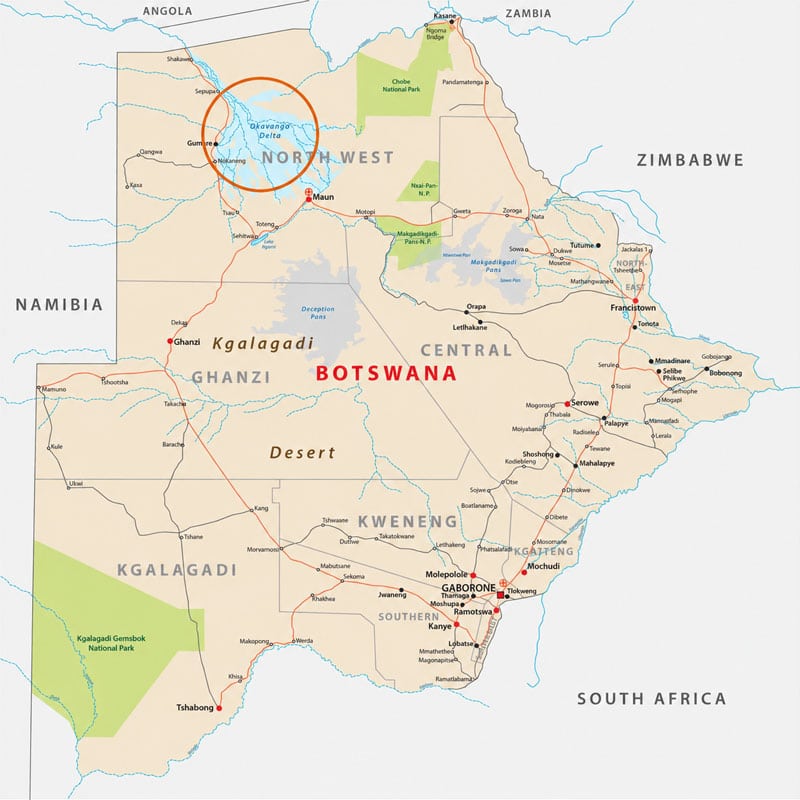
Why the Okavango Delta Is So Special
The Okavango Delta is special because it brings water into one of the driest regions of Southern Africa. This creates a contrast that is difficult to appreciate fully until you see it. One moment you may be flying over dry Kalahari landscapes, and the next you see shining waterways, green islands, palm trees and herds of animals gathered around the floodplains.
It is also one of the best places in Botswana for a varied safari experience. During one journey, you can enjoy mokoro safaris, boating, game drives, walking safaris and traditional wildlife viewing. The Delta allows you to experience the bush from different perspectives, rather than only from a vehicle.
For travellers who want a quiet and deeply natural safari, the Okavango Delta offers something very different from busier destinations. Many camps are small and remote, especially in private concessions. This often means fewer vehicles, more space and a stronger feeling of being immersed in the wilderness.
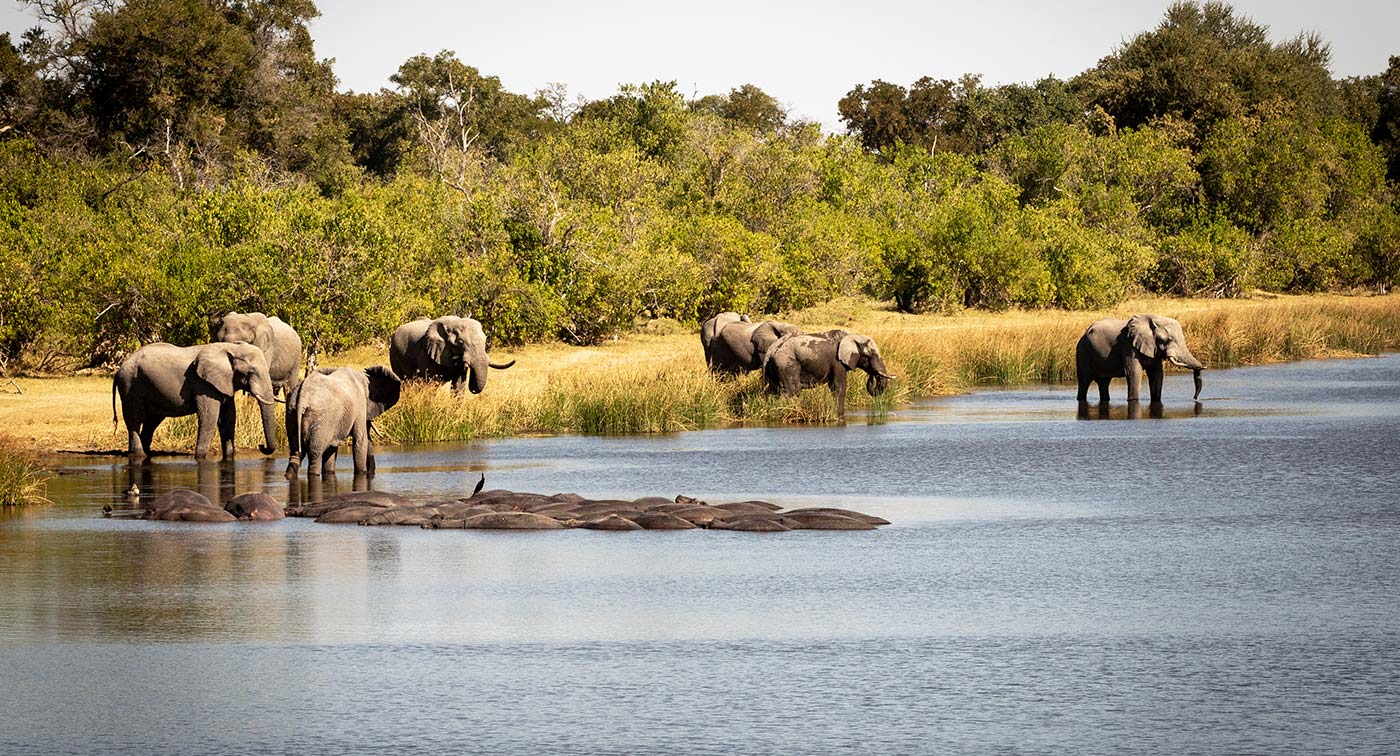
The Delta is rich in wildlife. You may see elephants moving through the channels, zebra and giraffe on the open plains, hippos in deeper water and predators such as lion, leopard, cheetah and African wild dog. The variety of habitats supports an impressive range of animals and bird species.
The Okavango Delta Safari Experience
An Okavango Delta safari is not simply about ticking animals off a list. It is about slowing down and understanding the landscape.
A typical safari day may begin before sunrise. The air is cool, the light is soft and the sounds of the bush are clear. You might head out on a game drive in search of predators such as lion, leopard or cheetah. In some areas, guides follow tracks left in the sand, interpreting signs of what happened during the night.
Later in the day, you may explore the waterways. A mokoro safari allows you to glide through narrow channels in a traditional canoe. These boats were originally carved from trees, although many modern mokoros are now made from more sustainable materials. The experience is peaceful and quiet, giving you time to notice smaller details such as frogs, dragonflies, water lilies, birds and animal tracks along the banks.
In areas with deeper water, boating safaris are also common. A motorboat allows you to cover more distance than a mokoro and can be excellent for spotting hippos, crocodiles, birds and wildlife coming down to drink.
This combination of land and water activities is one of the main reasons travellers choose the Okavango Delta. The exact experiences available depend on where you stay, the season and the water levels.
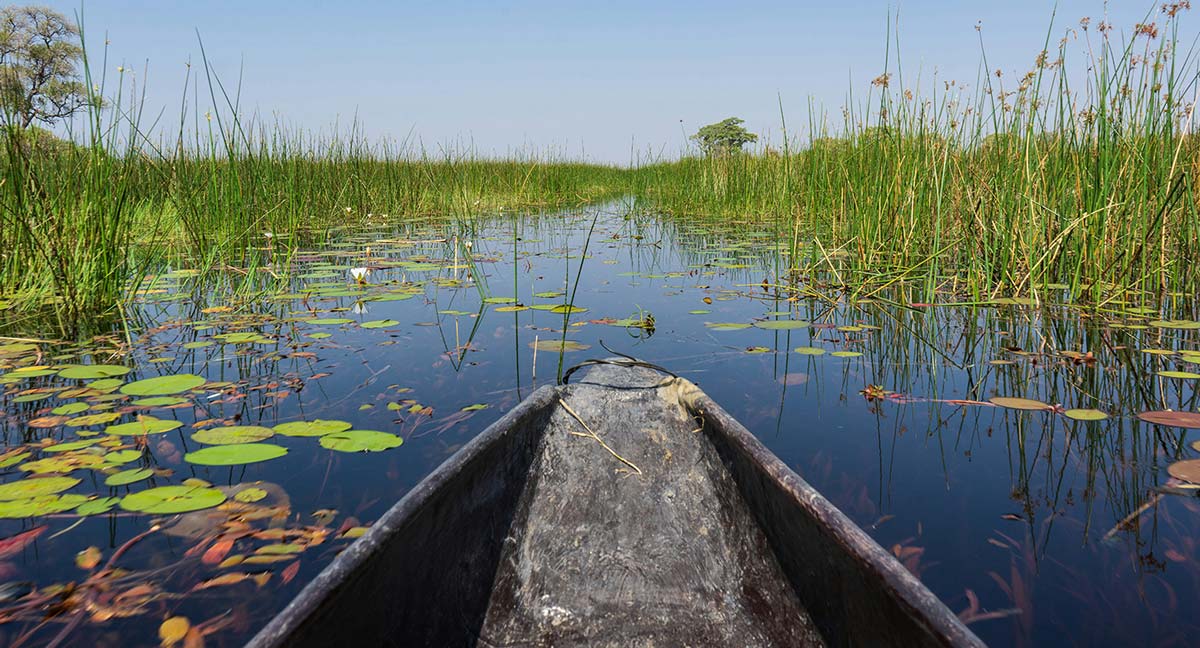
Mokoro Safaris in the Okavango Delta
The mokoro is one of the most iconic experiences in the Okavango Delta. It is a quiet, traditional canoe-style safari in which a local poler guides you through shallow channels and reed beds.
Unlike a motorboat, a mokoro does not rush. It moves slowly and silently, allowing you to feel close to the water and the surrounding wilderness. You sit low in the canoe while your guide stands behind you, using a long pole to move through the channels.
A mokoro safari is not usually about finding large predators. It is more about atmosphere, detail and connection with the landscape. You may see red lechwe moving through the floodplains, tiny reed frogs clinging to stems, water lilies opening in the sunlight or birds flying across the lagoons. Sometimes elephants can be seen in the distance, and other wildlife may occasionally appear near the water.
For many travellers, the mokoro becomes one of the most memorable parts of their Botswana safari. It is peaceful, authentic and very different from a vehicle-based safari.
Mokoro activities are dependent on suitable water levels and the location of your camp. If this experience is important to you, mention it when planning your itinerary so that you can choose an area where it is available.
Wildlife in the Okavango Delta
The Okavango Delta is one of Botswana’s most rewarding wildlife destinations. Its combination of water, grassland, woodland and islands creates habitats for many different animals.
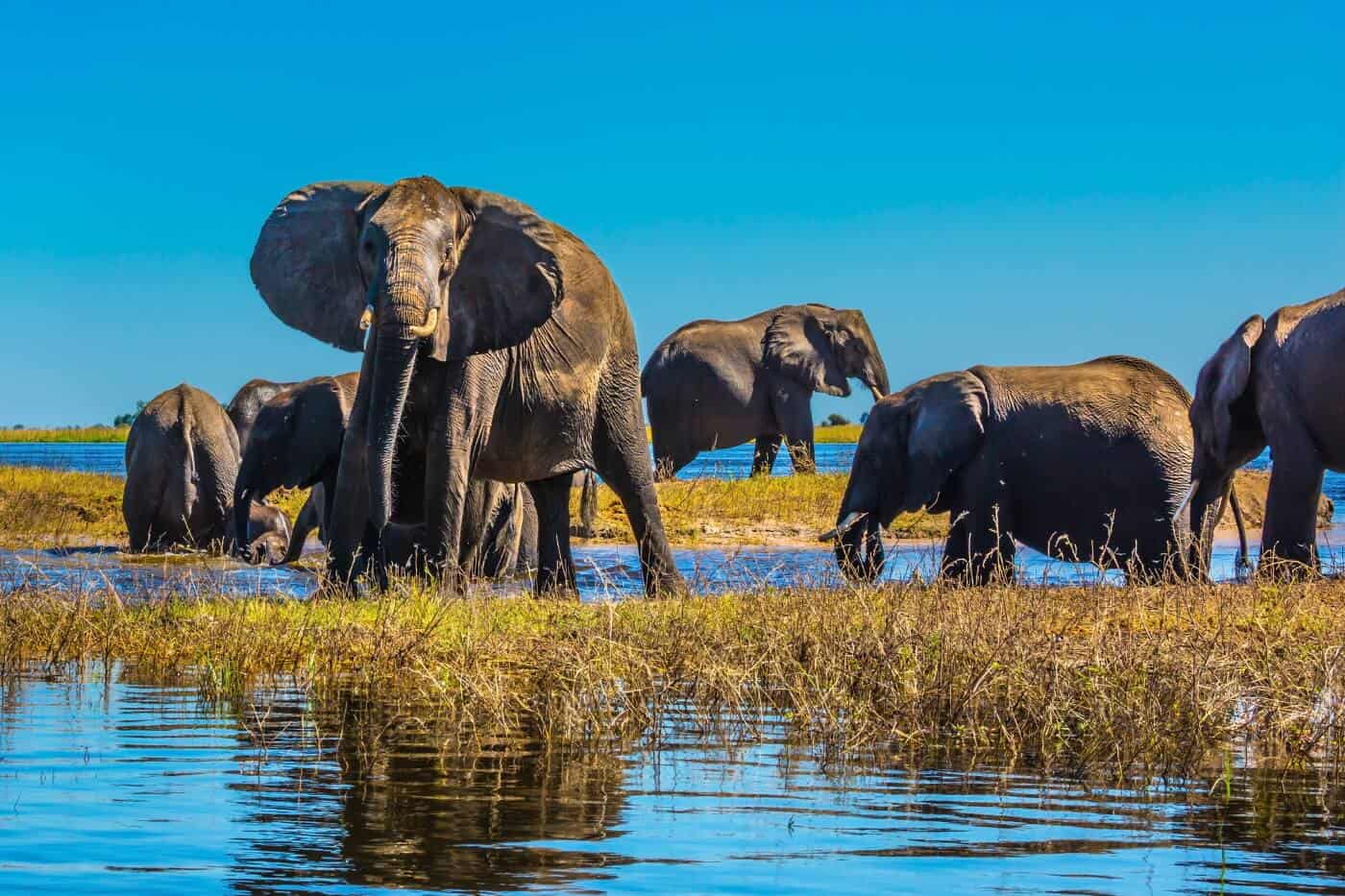
Elephants are common in many parts of the Delta. Large bulls may be seen feeding near the water, while breeding herds move between islands and floodplains. Buffalo are also found in many areas, particularly where there is enough grazing.
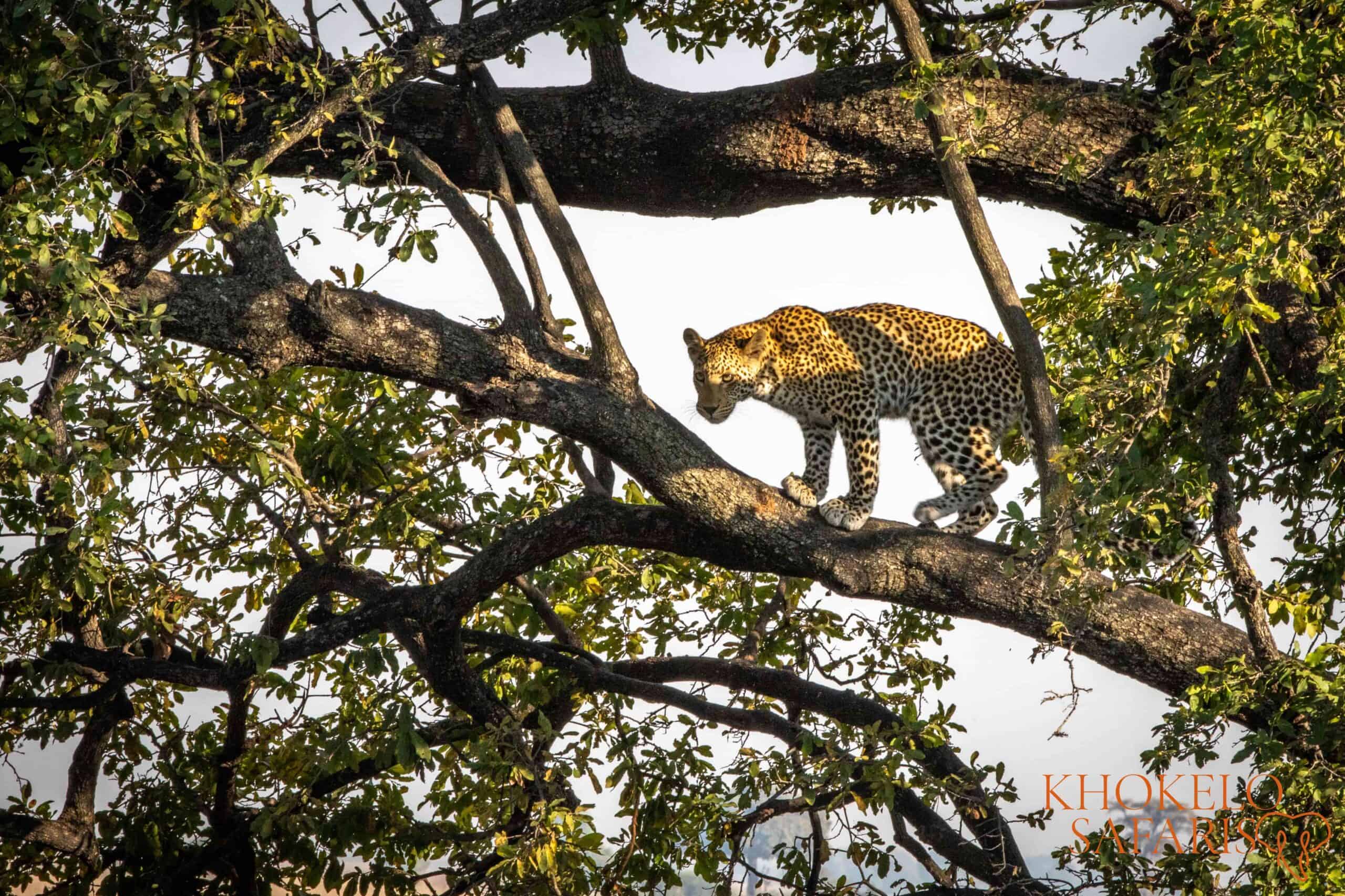
Predators are among the major highlights. Lions occur throughout the Delta and are frequently seen on game drives in some areas. Leopards are more secretive but may be found in wooded habitats or resting in trees. Cheetahs favour more open areas where they can use their speed, while sightings of African wild dogs are a special highlight for safari enthusiasts.
Botswana, together with Zambia, is one of the best countries in Africa for the possibility of seeing African wild dogs, although sightings can never be guaranteed.
The Delta is also home to antelope species closely associated with wetland habitats. Red lechwe are one of its signature animals, often seen running through shallow water with their long, graceful legs. Sitatunga, a shy swamp antelope, is harder to spot but particularly special when encountered. Depending on the area, you may also see impala, kudu, sable antelope and other plains game.
Other animals include zebra, giraffe, hippo, crocodile, serval, caracal and aardwolf. Some species are common, while others are rare and require luck to encounter.
Rhinos are not a regular sight in most parts of the Okavango Delta. They are generally associated with specific protected or reintroduction areas in Botswana. If seeing rhinos is important to your trip, discuss this during the planning stage.
Remember that wildlife sightings depend on the season, habitat, animal movements and luck. A good safari is about enjoying the overall experience, not just searching for a particular species.
Birdlife in the Okavango Delta
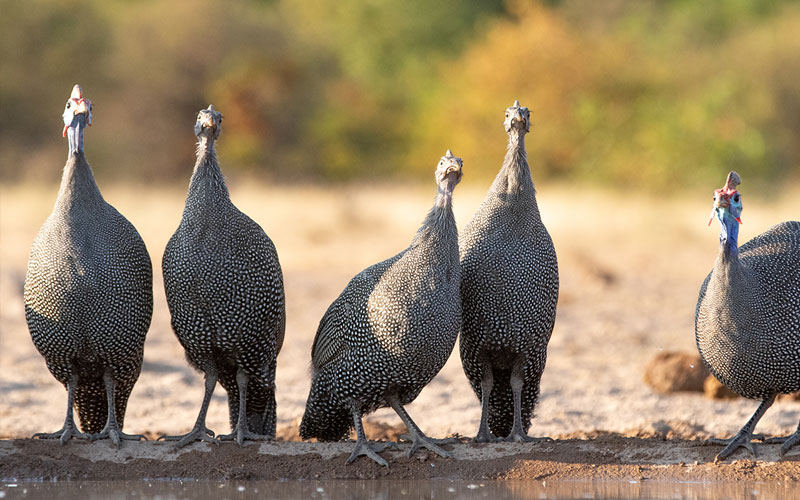
The Okavango Delta is an excellent destination for birdwatching. Its wetlands, reed beds, open plains and woodlands attract a wide range of bird species throughout the year.
You may see African fish eagles calling from tall trees, kingfishers flashing over the water, herons stalking through the shallows and colourful bee-eaters flying across the sky. During the wet season, migratory birds arrive and the birdlife becomes even richer.
One of the special birds associated with the Delta is the wattled crane. This elegant wetland species is a prized sighting for birdwatchers and contributes to the Delta’s conservation importance.
Even travellers who are not dedicated birdwatchers often find themselves paying attention to birds in the Okavango. The environment is so rich and active that birdlife naturally becomes part of the safari experience.
Binoculars are well worth packing, whether you are interested in identifying individual species or simply enjoying the variety of birds around the waterways.
Moremi Game Reserve
Moremi Game Reserve is one of the most famous safari areas within the Okavango Delta region. It protects a beautiful mix of floodplains, lagoons, woodland and dry land, making it rewarding for both wildlife viewing and scenery.
Moremi is particularly popular because it offers excellent game viewing and can be explored on guided safaris or by experienced self-drive travellers. Areas such as Xakanaxa and Third Bridge are well known among visitors planning a Botswana safari.
Game drives in Moremi can be very rewarding. Depending on the season and location, you may see elephants, buffalo, lion, leopard, wild dog, giraffe, zebra, hippo, antelope and many bird species. The landscape changes frequently, keeping each drive interesting.
For many first-time visitors, Moremi is one of the best ways to experience the Okavango Delta region without staying exclusively in private camps. It offers a balance of accessibility, wilderness and wildlife.
However, the experience differs from one area to another. Road conditions, seasonal flooding and wildlife movements can all affect your journey, so it is important to plan your route according to the season and your driving experience.
Private Concessions in the Okavango Delta
Private concessions are one of the reasons the Okavango Delta can feel so exclusive. These are privately managed safari areas outside the main public reserve system. They often limit the number of guests and vehicles, creating a quieter and more personal safari experience.
Depending on the location and water levels, activities in private concessions may include game drives, night drives, walking safaris, mokoro trips and boating. With fewer vehicles in many areas, wildlife sightings can feel more relaxed.
Private concessions are often suited to travellers who want a high-quality safari with experienced guides, remote camps and a deeper sense of wilderness. They can also be an excellent option for photographers, honeymooners and visitors who prefer to avoid crowds.
However, not all private concessions offer the same experience. Some are more focused on water-based activities, while others are better suited to game drives and land-based wildlife viewing.
This is why planning matters. The right area depends on the season, your budget, the activities you want to enjoy and the type of safari you have in mind.
Best Time to Visit the Okavango Delta
The best time to visit the Okavango Delta depends on what you want to experience.
The dry season, from around May to October, is the most popular period for safari travel. During these months, floodwaters from Angola usually reach many parts of the Delta, while wildlife becomes easier to find around permanent water sources. Game viewing is often strong, vegetation is thinner and the weather is generally dry.
June to August can be excellent for water-based activities in many areas, although exact water levels vary from year to year. September and October can be very good for wildlife sightings, but temperatures may become hot.
The green season, from around November to April, brings rain, fresh grass, dramatic skies and excellent birdwatching. Many animals give birth during this period, and the landscape becomes lush and colourful. It can also be a quieter and sometimes more affordable time to travel, depending on the camp and itinerary.
Both seasons have their advantages. The dry season is usually a strong choice for first-time travellers focused on classic game viewing. The green season can be excellent for photographers, birdwatchers and travellers who enjoy lush landscapes and fewer visitors.
Because the Okavango’s floodwaters originate far away in Angola, water levels do not follow a simple pattern of local rainfall. Conditions can vary considerably between areas and from one year to the next.
If you want to combine the Delta with other destinations, consider the wider seasonal picture. For example, Chobe National Park offers a different safari experience centred on its river and large elephant populations.
Game Drives, Walking Safaris and Boating
The Okavango Delta offers a range of safari activities, depending on where you stay.
Game drives
Game drives are ideal for covering larger areas and searching for wildlife such as lion, leopard, cheetah, wild dog, zebra, giraffe and sable antelope. Early morning and late afternoon drives are usually productive because animals tend to be more active during cooler temperatures.
The quality of the experience depends on the habitat, guide, season and wildlife movements. A good guide will help you interpret animal behaviour and understand the wider ecosystem, even when sightings are quiet.
Walking safaris
Walking safaris are available in some areas and offer a slower, more detailed way to experience the bush. A walk is not about chasing large animal sightings. Instead, it focuses on tracks, plants, insects, sounds and understanding how the ecosystem works.
Walking activities are always subject to local rules, safety considerations and the experience of the guide. Availability depends on the camp and location.
Boating safaris
Boating is a major highlight in water-rich areas. It allows you to explore lagoons, channels and open water while looking for hippos, crocodiles, birds and animals coming to drink.
Boat safaris can be particularly peaceful and scenic in the late afternoon, when the light changes across the water and the surrounding vegetation.
Combining activities
Mokoro trips offer a different experience again. They are slower and quieter, making them ideal for appreciating the smaller details of the Delta.
A well-planned Okavango Delta safari often combines several of these activities, giving you a fuller understanding of the landscape. Before booking, check which activities are included in your accommodation and which depend on the season or may cost extra.

Maun: The Gateway to the Okavango Delta
Maun is known as the gateway to the Okavango Delta. Most travellers pass through the town at some stage, whether they are flying to remote lodges, joining a mobile safari, collecting a 4×4 vehicle or beginning a self-drive route.
The town has safari operators, small hotels, shops, fuel stations and flight connections. Scenic flights over the Delta often depart from Maun and can be an excellent way to appreciate the scale of the landscape. From the air, you can see the waterways, islands, lagoons and animal paths that make the Okavango so unique.
For self-drive travellers, Maun is an important preparation point before heading into Moremi, Savuti or Chobe National Park. It is where you can check supplies, fuel, equipment and route details before entering more remote areas.
If you are staying at a remote camp, your onward journey may involve a light aircraft transfer rather than a road transfer. Many lodges in the inner Delta are not accessible by vehicle, so it is important to confirm the transport arrangements when planning your trip.
Combining the Okavango Delta with Chobe, Victoria Falls and Other Regions
The Okavango Delta combines well with other major safari destinations in Southern Africa. The best route depends on how much time you have and whether you prefer a relaxed journey or a trip with several different experiences.
The Okavango Delta and Chobe National Park
A popular route combines the Okavango Delta with Chobe National Park. Chobe offers excellent elephant viewing and the famous Chobe River boat safari, while the Okavango offers waterways, mokoro experiences and remote Delta landscapes.
Together, they give you two different sides of Botswana. The Delta is particularly known for its wetlands and varied habitats, while Chobe is famous for its large elephant populations and river-based wildlife viewing.
Explore our options for a fully catered safari in Botswana if you would like help combining these destinations into one itinerary.
The Okavango Delta and Victoria Falls
Many travellers also add Victoria Falls to the same journey. The falls can be visited from either Zambia or Zimbabwe, and the region connects well with northern Botswana.
This combination works particularly well for travellers who want wildlife, water-based safari experiences, dramatic scenery and one of Africa’s most famous natural landmarks in a single itinerary.
The best side to visit and the time needed depend on your travel dates, preferred activities and onward route.
The Okavango Delta and Namibia
Some longer journeys include Namibia, particularly if you are planning an extended self-drive adventure through desert landscapes, wildlife areas and wide-open roads.
A route through Botswana and Namibia can offer a striking contrast between the wetlands of the Okavango, the wildlife-rich areas of Botswana and Namibia’s arid landscapes. However, distances can be considerable, so allow enough time for driving and border crossings.
Other travellers may begin or end their trip in Cape Town before flying to Botswana or connecting through Johannesburg.
The key is not to add too many destinations too quickly. Botswana is best enjoyed with enough time to appreciate each area. A rushed safari can become tiring, especially when flights, transfers, border crossings and travel to remote camps are involved.

Self-Drive Safari or Guided Safari?
The Okavango Delta can be experienced in different ways, but not every style suits every traveller.
Guided safari
A guided safari is usually the easiest option. Your guide and safari team handle the route, wildlife tracking, park logistics and safety. This is ideal for first-time visitors, families, photographers and travellers who want expert knowledge without having to manage the practical details themselves.
Guided safaris can include accommodation, meals, activities and transfers, depending on the package you choose.
Fly-in safari
A fly-in safari offers comfort and access to remote camps. You fly from Maun to private concessions or lodges, saving travel time and reaching areas that are difficult or impossible to access by road.
This option is particularly appealing if you want to spend more time enjoying the Delta and less time travelling. It can also make it easier to include remote areas in a shorter itinerary.
Self-drive safari
A self-drive safari gives you more freedom, but it requires preparation and experience. Roads in Botswana can include deep sand, water crossings, remote tracks and long distances without services.
Self-drive travellers need a suitable 4×4, recovery equipment, route planning, sufficient fuel and water, and confidence in remote travel. It is also important to understand that most lodges in the inner Okavango Delta cannot be reached by vehicle.
A self-drive trip may therefore combine road-accessible areas with flights or guided activities in the deeper Delta.
If you prefer to organise the journey yourself, explore our Botswana self-drive safari options.
For many travellers, the best option is a carefully planned combination. You might self-drive some sections and use guided activities or fly-in transfers in others. Khokelo Safaris can help you decide what makes sense for your experience, budget and comfort level.
How Many Days Do You Need in the Okavango Delta?
For most travellers, three to four nights in the Okavango Delta is a good starting point. This gives you enough time to enjoy game drives, mokoro safaris, boating and the rhythm of the wilderness without feeling rushed.
If you want a deeper experience, five to seven nights can be even better, especially if you stay in two different areas. For example, you might combine a water-based camp with a land-based camp, or pair Moremi Game Reserve with a private concession.
For a shorter trip, two nights can still be worthwhile, but your options may be limited by flight times, transfers and the activities available at your camp.
The Delta rewards patience. The more time you spend there, the more you notice changes in the light, animal movements, behaviour and atmosphere.
When deciding how long to stay, consider your full itinerary. If you are also visiting Chobe or Victoria Falls, allow enough time for transfers between destinations and avoid scheduling too many activities on arrival or departure days.

What to Pack for an Okavango Delta Safari
Packing properly helps you enjoy your safari comfortably. Your exact packing list will depend on the season, accommodation and whether you are travelling by road or light aircraft.
Bring lightweight clothing in neutral colours such as khaki, beige, olive or brown. These colours are practical for game drives and mokoro safaris. Avoid very bright colours where possible.
Early mornings can be cold during the dry season, so bring warm layers. Afternoons can become hot, especially later in the year. A hat, sunglasses, sunscreen and comfortable closed shoes are important.
Binoculars are highly recommended. They make a big difference when birdwatching, spotting wildlife across floodplains and enjoying smaller details during boating or mokoro activities.
For photography, bring extra batteries and memory cards, along with protection against dust and water. If you are travelling by light aircraft, check the luggage weight and bag requirements with your safari operator before departure.
Self-drive travellers need additional equipment and supplies. Depending on their route, this may include vehicle recovery equipment, enough drinking water, food, maps, communication tools and emergency supplies.
If you are unsure what to bring, ask your accommodation or safari planner for a packing list tailored to your itinerary.
Health and Safety in the Okavango Delta
The Okavango Delta is a wild environment, so it is important to follow the safety instructions provided by guides and camp staff.
Never approach animals on foot unless you are with a qualified guide as part of an authorised activity. Never feed wildlife, and do not leave food unsecured in camp. Hippos and elephants can be dangerous, particularly if they are surprised or approached too closely.
The Delta is also in a malaria-risk region. Speak to a doctor or travel clinic before travelling to Botswana and ask about appropriate malaria precautions for your route and season. Long sleeves, insect repellent and suitable accommodation precautions can also help reduce mosquito bites.
For self-drive travellers, safety begins with careful route planning. Do not underestimate distances, road conditions, water levels or fuel requirements. Check local conditions before setting out, carry adequate supplies and avoid driving at night in wildlife areas.
Remote travel requires preparation. Make sure you understand the route, have the necessary equipment and know what to do if your vehicle becomes stuck or you experience a problem far from assistance.
Follow local guidance throughout your trip and allow flexibility in your schedule, especially when travelling through remote areas.
Planning Your Okavango Delta Safari with Khokelo Safaris
Planning an Okavango Delta safari is not only about choosing a lodge. It is about choosing the right area, season, route and safari style.
Some travellers want a luxury lodge in a private concession, with excellent guiding and a peaceful atmosphere. Others prefer a mobile safari, a self-drive route or a combination of camping and lodges.
Some want to focus on wildlife, while others prefer a slower journey with mokoro safaris, boating and quiet time in nature.
At Khokelo Safaris, we help design the safari around you. We consider your travel dates, budget, comfort level, preferred pace and the kind of experience you want. Then we help shape the route so that it feels realistic, enjoyable and well prepared.
The Okavango Delta is one of Africa’s finest safari destinations, but it works best when planned carefully. With the right advice, your journey can include an excellent balance of wildlife, water, wilderness and comfort.
Whether you are dreaming of a mokoro drifting through quiet channels, game drives in Moremi Game Reserve, a luxury camp in a private concession or a wider Botswana safari that includes Chobe National Park and Victoria Falls, Khokelo Safaris can help you plan the details.
FAQs about the Okavango Delta
x
x
Is the Okavango Delta worth visiting?
Yes. The Okavango Delta is one of the best safari destinations in Botswana and one of Africa’s most unique wetland wilderness areas. It offers mokoro safaris, boating, game drives, walking safaris, birdwatching and beautiful Delta landscapes.
What is the best time to visit the Okavango Delta?
The dry season, from around May to October, is usually best for classic game viewing, especially as wildlife gathers near permanent water. The green season, from November to April, is excellent for birdlife, photography, lush scenery and a quieter atmosphere in some areas.
Where does the Okavango Delta water come from?
The water begins in the Angolan Highlands. Rainfall feeds the Cubango and Okavango River system, which carries water south into northern Botswana and the Kalahari Basin. The water spreads across the landscape rather than flowing into the sea.
What animals can you see in the Okavango Delta?
You may see elephants, zebra, giraffe, buffalo, hippo, crocodile, lion, leopard, cheetah, African wild dog, red lechwe, sitatunga, sable antelope, serval, caracal, aardwolf and many bird species. Sightings depend on the area, season and luck.
What is a mokoro safari?
A mokoro safari is a traditional canoe-style safari through the shallow waterways of the Okavango Delta. A local poler usually guides the boat, making it one of the quietest and most peaceful ways to experience the Delta.
Is Moremi Game Reserve part of the Okavango Delta?
Moremi Game Reserve protects an important part of the Okavango Delta ecosystem. It is one of Botswana’s most famous safari areas and is known for varied landscapes and rewarding wildlife viewing. You can learn more on our Moremi Game Reserve page.
Can you combine the Okavango Delta with Chobe National Park?
Yes. The Okavango Delta and Chobe National Park are commonly combined in Botswana safari itineraries. The Delta offers mokoro experiences, lagoons and remote wilderness, while Chobe is famous for elephants and the Chobe River.
Can you combine the Okavango Delta with Victoria Falls?
Yes. Many travellers combine the Okavango Delta with Victoria Falls in Zambia or Zimbabwe. This creates a varied itinerary with wildlife, water-based safari experiences and one of Africa’s most famous natural landmarks.
Is the Okavango Delta good for self-drive safaris?
Yes, but self-drive travel requires preparation and experience. Road-accessible routes can take you to parts of the wider Delta region, including Moremi, but the inner Delta is generally accessed by light aircraft or other arrangements rather than ordinary road travel. Some areas involve deep sand, water crossings and remote tracks. A suitable 4×4, careful planning and experience with bush travel are important.
How many days do you need in the Okavango Delta?
Three to four nights is a good starting point. Five to seven nights can be better if you want to experience different areas, such as Moremi Game Reserve and private concessions.
Are there rhinos in the Okavango Delta?
Rhinos are not commonly seen across most standard Okavango Delta safaris. Their presence is more limited and associated with specific protected or reintroduction areas. If seeing rhinos is important to you, discuss this when planning your route.
What makes the Okavango Delta different from other safari destinations?
The Okavango Delta combines water and desert in a remarkable way. You can experience mokoro safaris, boating, game drives, walking safaris, islands, lagoons and rich wildlife in one destination. This variety of habitats and activities makes the Delta different from many other safari regions.
Free quote
Ready for the adventure?
Would you like to design your dream holiday in Botswana with Khokelo Safaris? Feel free to contact us to discuss the possibilities and costs.
Navigation
Downloads
Contact
Khokelo Safaris
Jan ter Gouwweg 85
1412 DB Naarden
The Netherlands
info@khokelosafaris.com
+31 35 2 340 043
Social Media


Newsletter
Want to receive the latest news and blogs directly in your mailbox? Subscribe here for our newsletter.